Friday, and such a great day of birding, I must divide it into two parts to do it justice. Having spent Thursday evening poring over maps, I had a clear plan and birding sites lined up along a route that would ultimately head me home at the end of the day.
Since I didn’t get to Lafayette in time to bird Thursday night, that was my first priority. Knowing I had to head toward Vermilion Parish next, I picked Moncus Park in the southwest corner of Lafayette. It was a good pick!! I had never visited this park, but it is a beauty, Friends in Lafayette, if you haven’t been there, go!
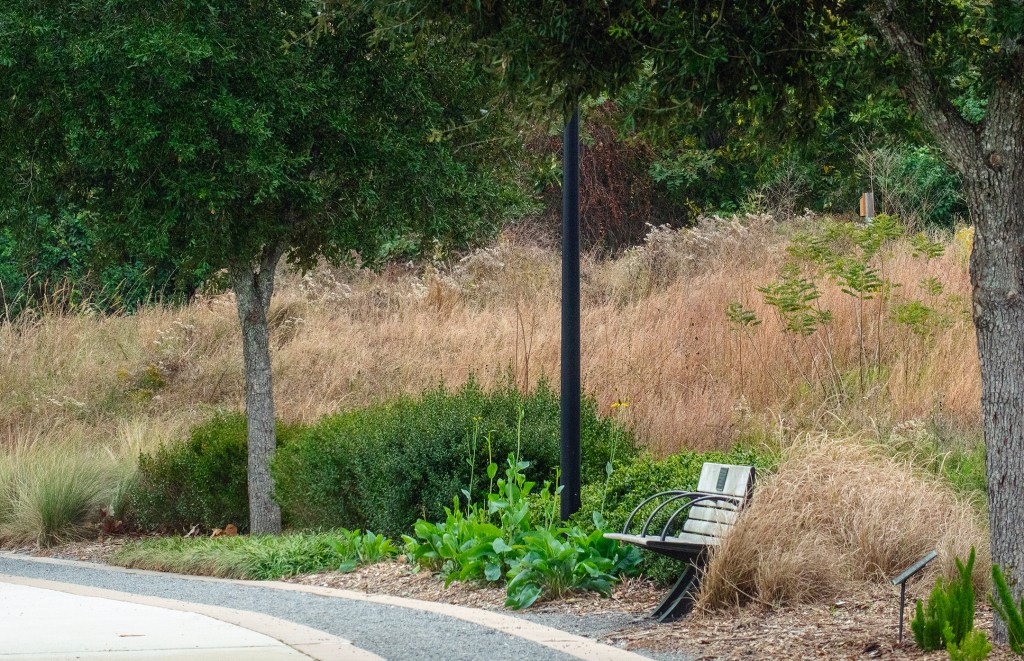
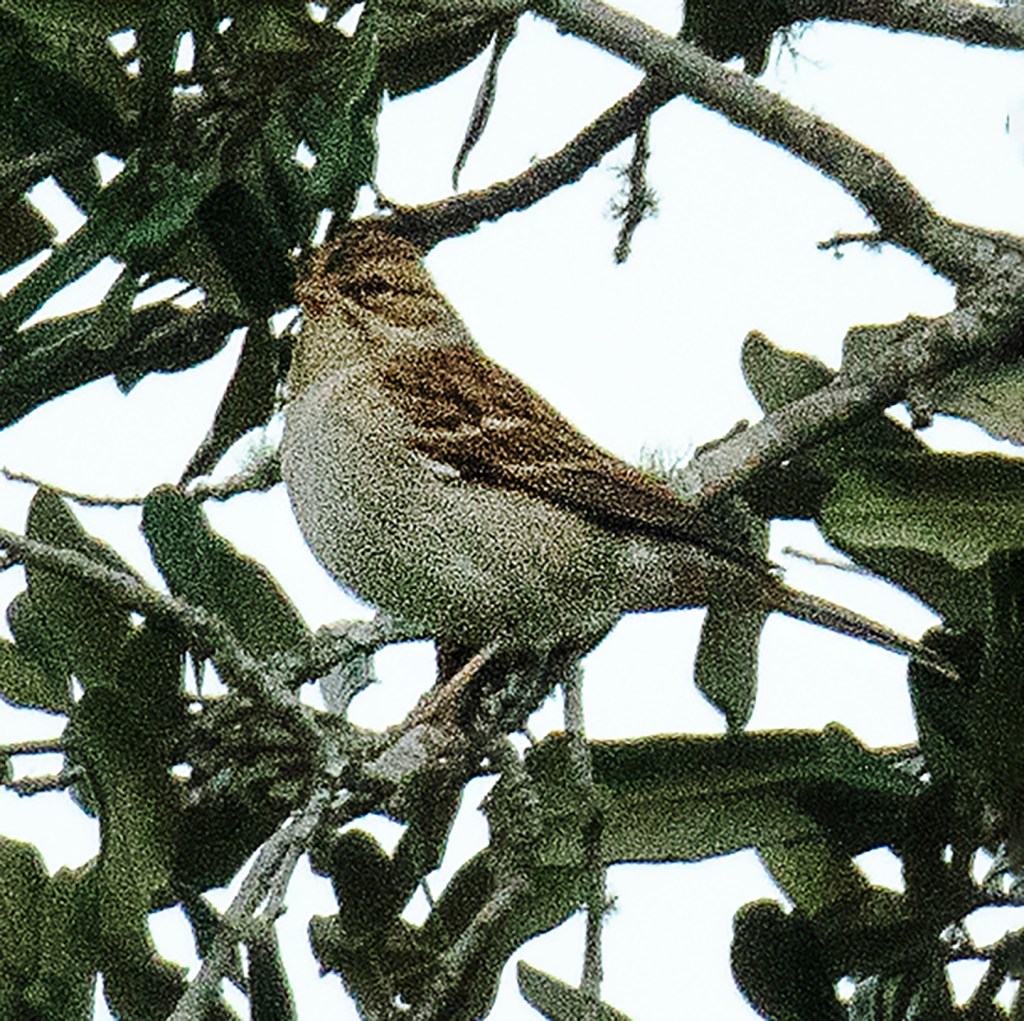
Based on aerial photos of the park on the iNaturalist platform where I post my bird observations, it is clear that the native plant prairie at Moncus Park is a recent edition. Sparrows are among the species that love tall grass. This little prairie produced a Savannah Sparrow (Passerculus sandwichensis) and one of my faves, a “chippie” or Chipping Sparrow (Spizella passerina).
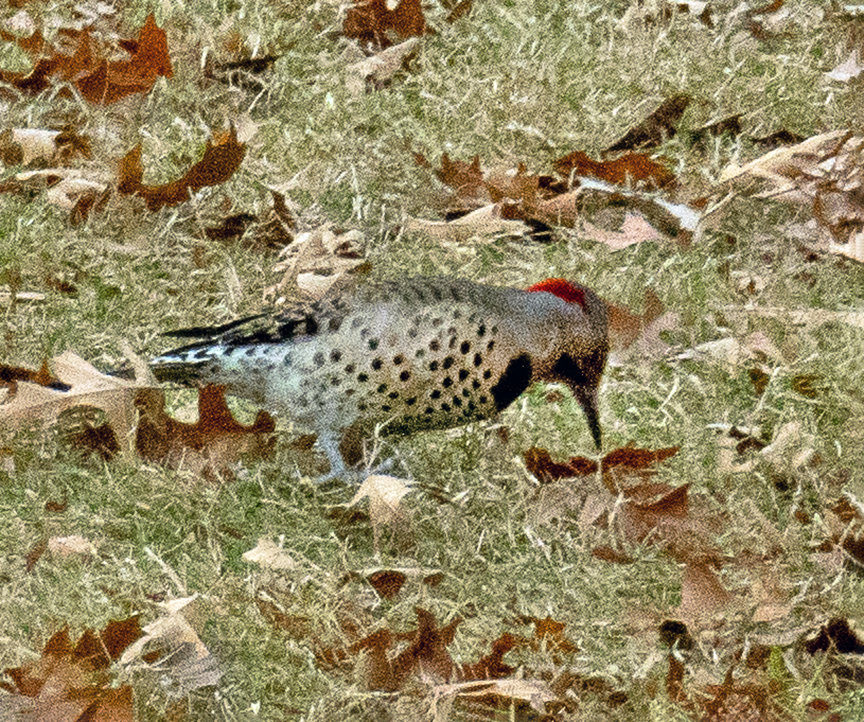
Directly across from the prairie, a number of birds were foraging among the leaves under several small trees near the edge of a pond. I saw a Blue Jay (Cyanocita cristata) for sure, and several others I couldn’t quite make out. One bird flew up to one of the tree trunks, and for just a moment, I thought “woodpecker.” But it dropped back to the ground quickly and birds on the ground among leaves are hard for me to see clearly from a safe distance, much less to identify accurately. Thus is was a delightful surprise to get my photos on the computer Friday night and see that it was a Northern Flicker (Colaptes auratus).* Indeed, there were four among the leaves under that tree. I don’t see flickers all that often, so, Yay!
I could have spent much more time at Moncus Park, but… not this trip. Palmetto Island State Park in Vermilion Parish was calling my name. The woman at the park gate took one look at me and asked, sweetly, “Might you be over the age of 62?” She handed me a map of the park and in I breezed. Sometimes it pays to have wrinkles.
Evangeline Pond lies in the center of the park and it didn’t take long to find. As I pulled up to park, a hawk flew across the opening to the pond at the end of a narrow trail entrance. I got just a glimpse, but I’m pretty certain it was a red-tail. You’ll see why I think that in a minute.
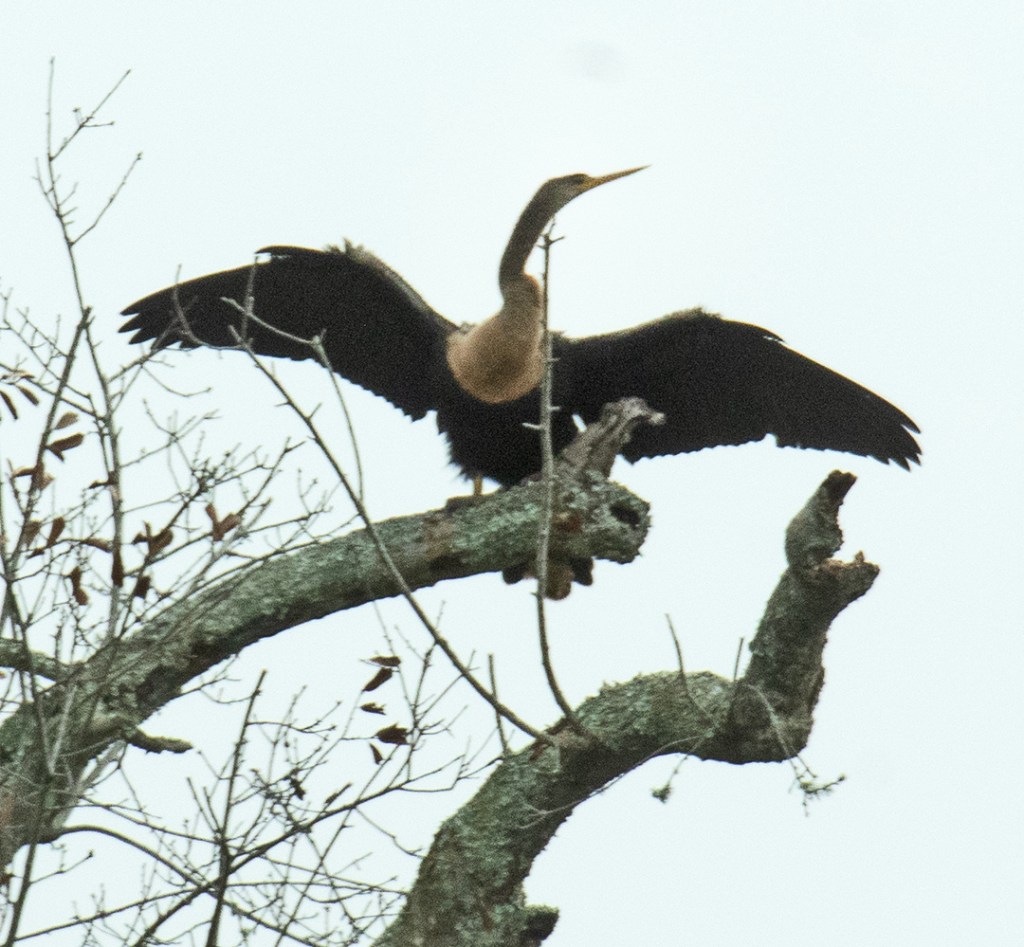
First bird I spied from pond’s edge was an Anhinga (Anhinga anhinga) drying it’s wings at the top of a tall tree across the pond. What an awesome bird! Did you know that the Anhinga is not only a unique species but the only species in the Genus “Anhinga”? In other words, it is a unique bird with no close relatives. And like no other bird, they spear fish with their beak, then perform the unlikely feat of flipping the fish into the air off the tip of the beak, then opening the beak wide in the split seconds the fish is in the air so to swallow it head first and whole. Really.
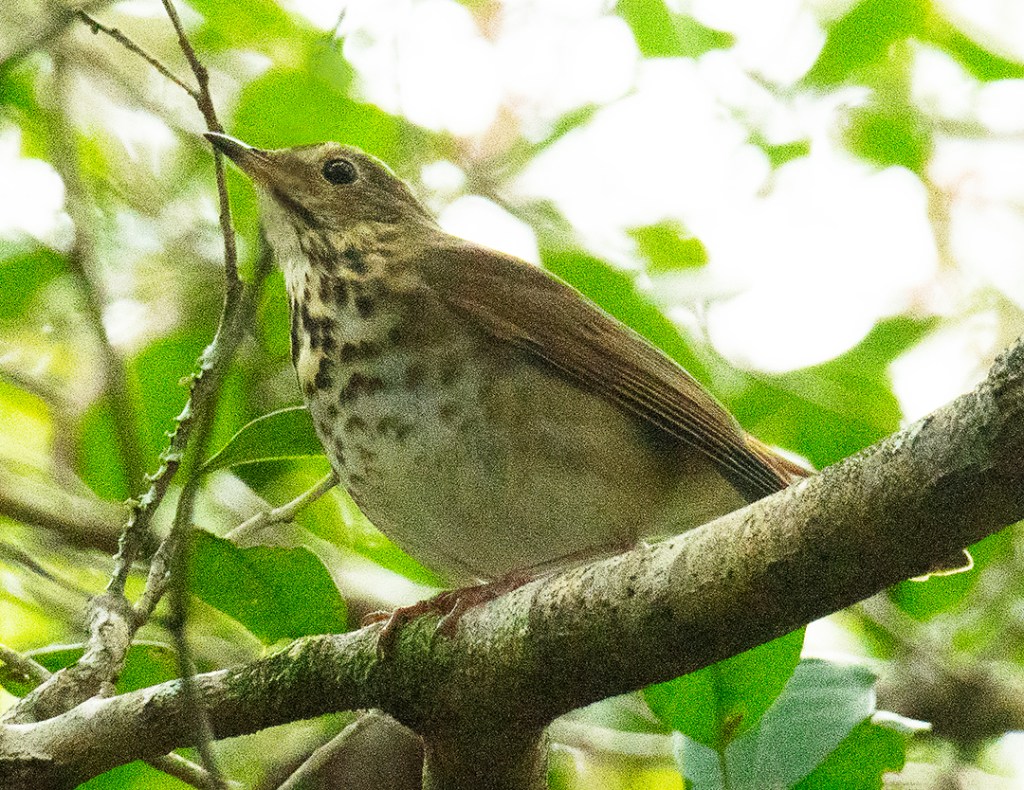
A short distance into the hardwoods and palmettos surrounding the pond, I stopped in several places to “pish” for birds, that is to make a “pishing” sound that many small woodland birds seem to want to investigate. It worked! The only problem with pishing is that the birds get excited and don’t sit still for photographs! I’m also certain that, even though I identified a number of species–Hermit Thursh, Gray Catbird (Dumetella carolinensis), and a couple others–I didn’t get them all.
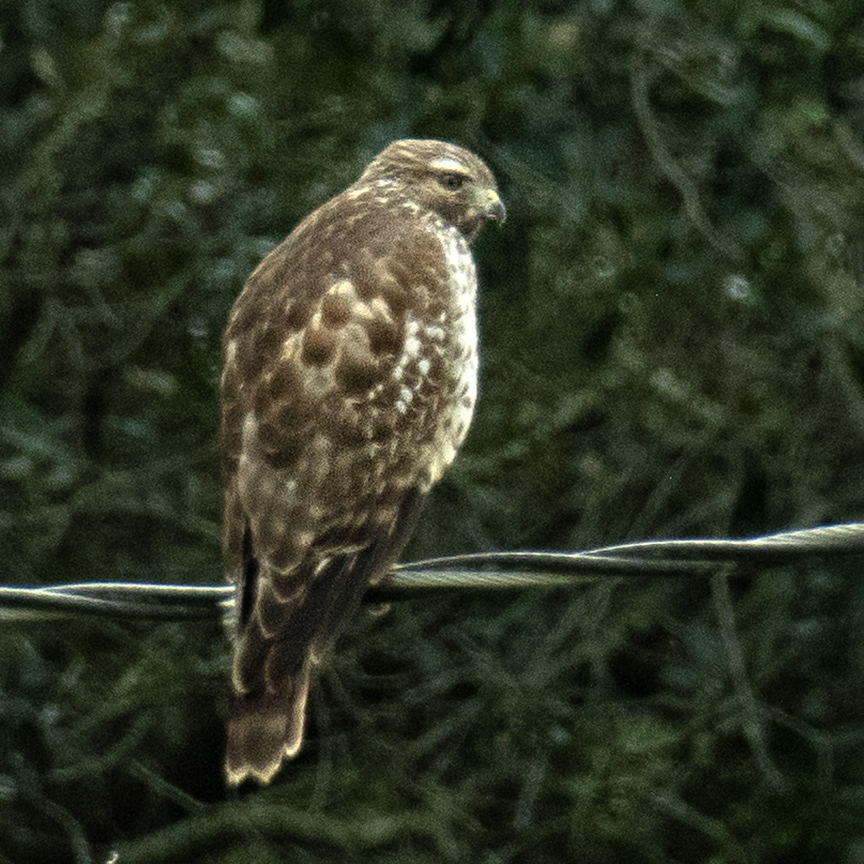
Now for the ending of the hawk story: Needing to head to Jefferson Davis Parish if I was to stay on track for the day, I hit the road again and just outside the park, spied a hawk on a power line. Of course, I pulled over carefully, got out to balance my long lens on the roof of the care and clicked off a few frames. Yay!
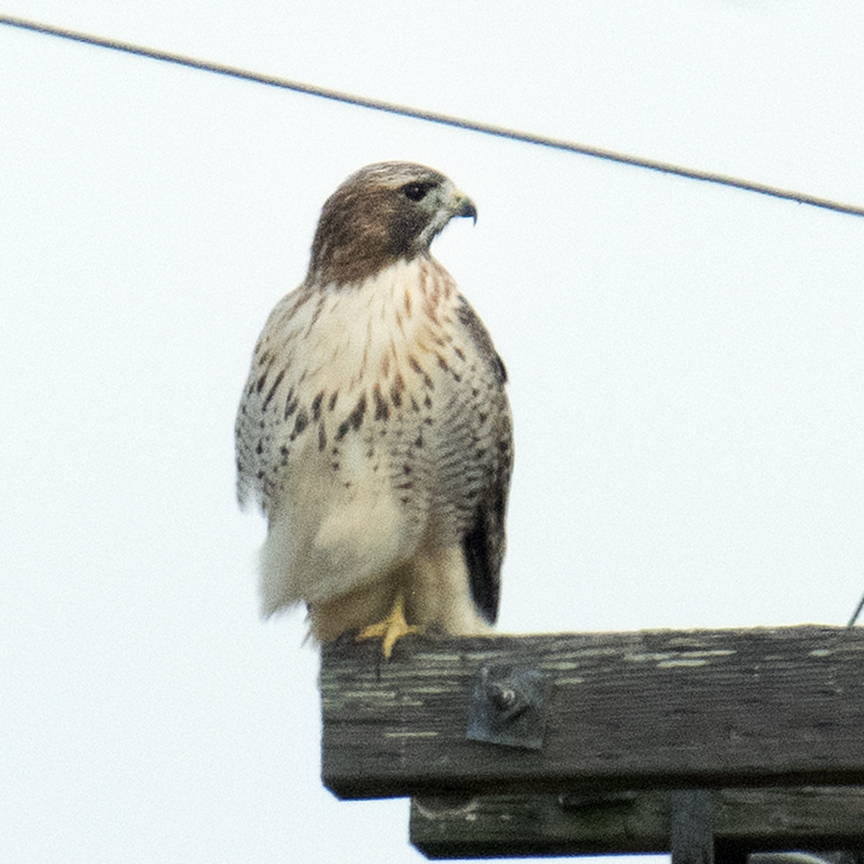
A few miles down the road, the scene is replayed: Hawk on a pole, pull over, balance camera on car, click off a few frames. Then: rinse and repeat. All the way across Vermilion Parish, every few miles, hawks on poles or wires could NOT be passed by. Well, once. With traffic behind me and oncoming, I couldn’t suddenly stop. Darn!
All except the first one was a Red-tailed Hawk (Buteo jamacensis), which seems to be a specialty of Vermilion Parish. Stopping so often was probably not the best use of my time, but it sure was fun. I give you the first and the next to last (because the photo of the last isn’t good).
On to Jeff Davis and Allen Parishes in the last chapter of this adventure. Stay tuned.
*Flickers are indeed in the woodpecker family.

