A few months ago, I asked the readers of this blog whether I should post some chapters here of the book I’m writing. You see, after writing a number of chapters quickly and feeling good about them, I hit the proverbial wall–not writer’s block so much as writer’s fear. What if no one wants to read this book? But in the firm belief that nothing ventured, nothing gained, here goes. Honest feedback highly valued! And be forewarned: Since this is a chapter in a book, it will be longer than the usual blog post.

After Death, A Voice
After death,
a voice rises

Earth
groans

Thunder
rumbles

Live, they say

Live. Live. Live.

--BJK, c. 2018
July 17, 2010 – I climb, double back, climb some more. The road is narrow and steep, with multiple switchbacks. My headlights barely pierce the night and the fog.
Then, suddenly, I’m in the clear. Dawn tints the horizon. The valley I have just come through lies beyond the edge of the road, filled to the brim with fallen clouds.
Pause. Breathe. Don’t forget to breathe.
I had risen early, loaded my bags into the “hire car” (in Aussie-speak), and headed out well before dawn. My goal was the Rutherglen wine region of Central Victoria. It was a 9-hour drive from Huskisson on Jervis Bay, where I had spent my first couple of full days in Australia scuba diving and whale watching.
I was in Australia to make a presentation at an academic conference in Sydney, but between arrival and the conference, I had a week to travel and was determined to make the most of it. Having arrived at the Sydney airport at 6:35 a.m., by 8 a.m. I had picked up my hire car and was headed southeast on the Grand Pacific Drive through Royal National Park to a lovely brunch of scones and curdled cream at The Palms Café in Stanwell Park.
The drive from Sydney to Huskisson, where I was to spend the first two nights, is just 3 ½ hours, but I had researched a route that would maximize exposure to the southeast coast of Australia and had picked a couple of sights to see along the way. From Stanwell Park I headed south along the coast toward Kiama, stopping for a short hike on a trail called the Coastal Walk. From the top of a breath-takingly steep cliff, I looked straight down at coral heads and rocks through the crystal waters of the Tasman Sea.
Farther along at the Mark Dwyer Reserve, I sat for a spell on a grassy rise mesmerized by waves rolling in, each wave softening the rocky shore momentarily with white frosting. This spot also afforded a view far ahead of the road I was traveling, where it curved out over the water to get around a precipitous cliff farther down the coast.

Then Kiama with its famous blowhole.
Again and again, the beating heart of the universe sends water shooting up through a hole in an impossibly rocky shore—a hole of its own making, I imagine—and for a split second, a rainbow brightens drab stone. Clockwork.
Yet no two sprays are exactly the same shape or duration. Now comes a mighty one with droplets soaring to eye level of the enthralled humans on the observation platform over the hole, then comes a baby splash that barely moistens the lowest rocks.
I think about variation within continuity, moments within timelessness, and the oxymoronic power of water to mold rock.
It’s early afternoon of my first day in Australia and I am in love. The evidence is in my hands: Before going on to the next adventure, I take a break for a snack at the Blowhole Café to transfer photos from the memory of my camera, now full, to my laptop.
From Kiama I travel west on Jamberoo Road and after a bit of winding and looping through hairpin turns, I am in the rainforest. The Illawarra Fly Treetop Walk is just past the mountain village of Knights Hill. And even though it is 27.4 kilometers inland, the Treetop Walk offers an astonishing view east all the way to the coast, with the Tasman Sea on the horizon.
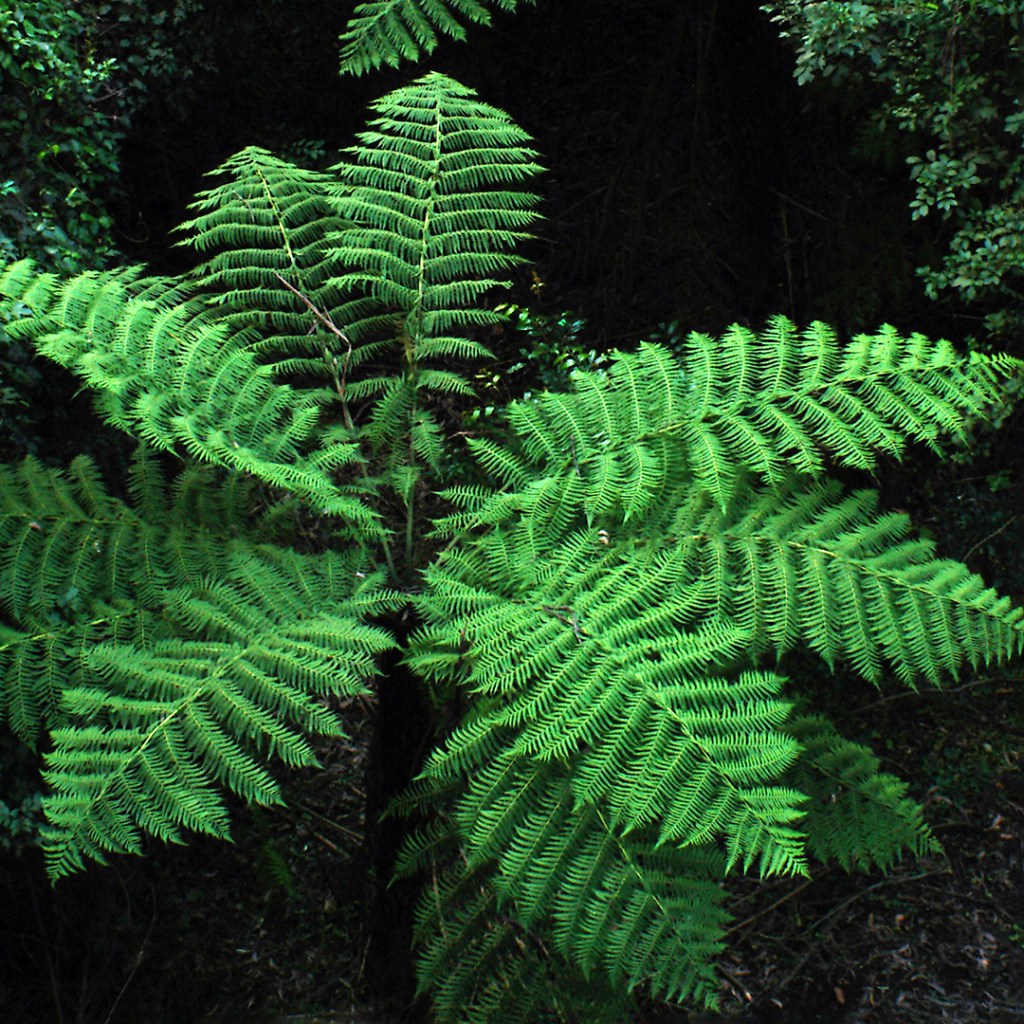
The Treetop Walk is just that: a 1.5 kilometer trail jutting out from the side of a mountain onto 500 meters of suspended steel walkway that travel through the canopy 20-30 meters above the ground. Looking straight down, the tops of spectacular tree ferns rise to meet you. The walkway terminates at Knights Tower, where you can climb spiral stairs to 45 meters above the forest floor.
On the walkway, which I had pretty much to myself that late afternoon, I stood quietly and listened. With the sounds of civilization far below and beyond this rain-forested mountain, I recorded the clarion, complex calls of lyre birds on my phone.
After browsing the gift shop at Illawarra Fly, I drove straight back through the looping, twisting mountain road to the coast and continued south to Huskisson, a late dinner and, finally, bed. Don’t ask me to calculate the hours traveling. I had gone through more time zones than my brain can process. I just know I departed Monroe, La., on a flight to Memphis at 5 p,m. Tuesday, July 13, and it was 6:30 p.m. Thursday, July 15, when I arrived in Huskisson.
Friday: Whale watching!
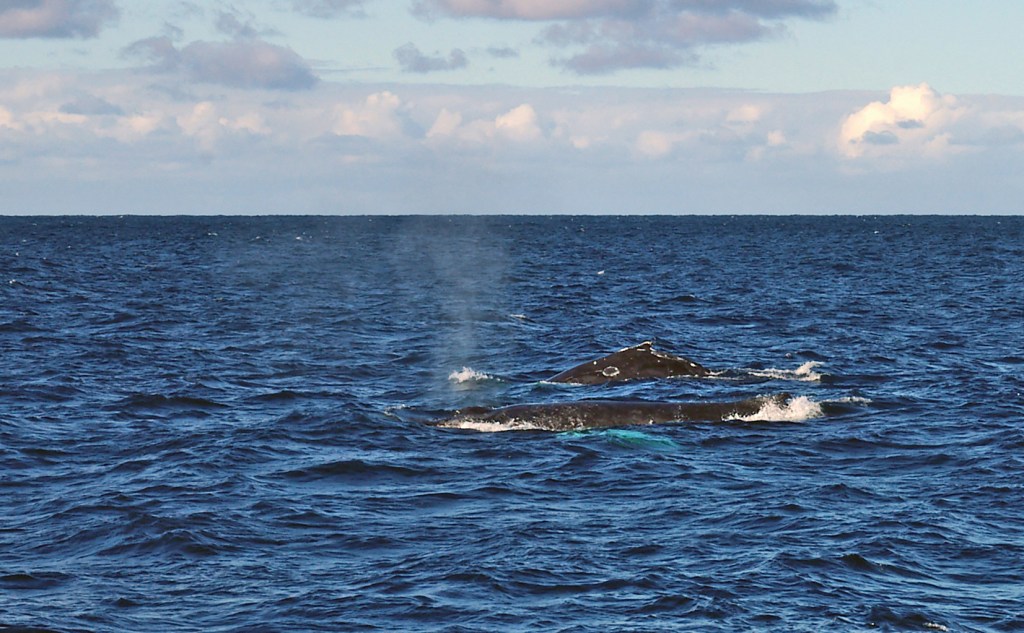
What triggered my fascination with whales many, many years ago? I don’t recall. But the village of Huskisson, situated on the shores of Jervis Bay, NSW, was my first overnight stop because humpback whales migrate within a mile of the cliffs of Jervis Bay peninsula on their way north and sometimes take shelter in the Bay with their newborn calves on their way back south.
We cruised up and down outside the Bay all morning, to no avail. Back at the dock, the boat operators offered a discounted afternoon tour because we had seen no whales. I raced ashore to grab fish and chips for lunch and got back on the boat. Come all this way and see no whales? Unthinkable.
By the end of the afternoon, we had sighted six humpbacks, four outside the Bay and two inside the Bay on our way back in. But even the ones inside the Bay were on a mission. All were headed north and in no mood for tarrying and playing. Yet the humans on the boat called out excitedly to each other, “There! Over there!” each time a giant back emerged briefly above the water and exhaled a tower of breath and droplets into the air. Oh, leviathan! To catch but a glimpse of you is to be flooded with wonder.
Saturday: Scuba diving. And I was not in shape for it.
We left Jervis Bay for our first dive and anchored in front of the cliffs at the edge of the Tasman Sea, somewhat separated from the South Pacific by New Zealand, some 2000+ nautical miles off the southeast coast of Australia. The water was cold and the surge was significant. Getting into a full wet suit on the heaving deck of our dive boat was the first challenge, so I was a bit taxed before I got into the water. The swim against the current from the entry platform at the back of the boat to the anchor rope we were to descend at the front of the boat had me breathing very hard. Moreover, although I had never, ever gotten seasick ON a dive boat, the combination of surge and current and a buoyant wet suit that made it hard to get below the surface quickly did the trick. Errrp! Fortunately air regulators for sport diving are designed to handle it.
I completed that first dive, but I can’t tell you much about what we saw. I had no underwater photography equipment with me and visibility was not good, but more to the point, I was more concerned with keeping up with our dive master and a group of much younger divers than with sightseeing. Thus, when the boat had moved to a new, calmer location inside Jervis Bay, I did something I had never done before: I left a tank of air I had paid for sitting on the deck. I did not go back into the water because I felt it would not be safe for either me or the dive buddies I might have endangered by getting into trouble myself while on a dive. So I sat on the deck and basked in the sunshine and the beauty all around, and later proudly and gratefully recorded my one dive in the Tasman Sea in my dive log. Respect—for the elements and one’s own limitations—is key.
Within walking distance of my hotel, a stretch of Jervis Bay called Shark Net Beach beckoned. I spent the afternoon happily walking the rocks and sand and exploring tide pools. Plant? Animal? Mineral?
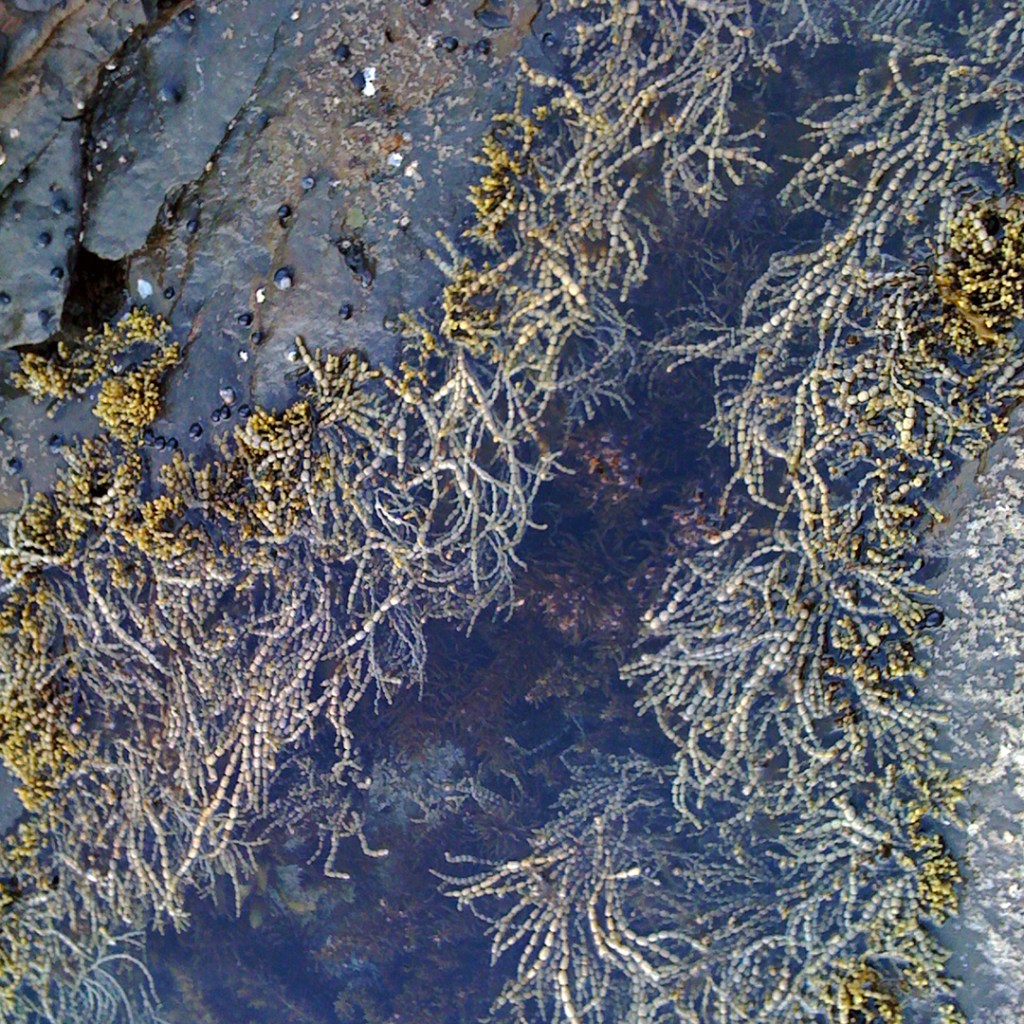
Then, I knew a lot less about creation than I do now, but still, I look at the photos and wonder. Today, I upload one to the citizen science platform iNaturalist to learn that the beaded creature in my photos is a seaweed called “Neptune’s necklace.” It makes its own food from the sun and provides shelter from predators and drying out during periods of low tide to countless little critters. Oh, glory!
And so, early Sunday morning I head inland, toward Rutherglen, a 9-hour drive away. The lowlands bordering the mountains immediately west of Huskisson are socked in. The lights of a roadside café break through the fog just in time for me to brake and pick up a cup of coffee. I can’t resist stopping for a few shots of an old bridge with turreted stone towers guarding both ends. I’m not quite the only person on the road this morning; an approaching car’s headlights pierce the fog momentarily.
And then, climbing, doubling back, climbing some more… and suddenly the sky overhead is clear. Golden dawn shades upward from yet pitch-black hills into blue-gray sky. I look down at the valley full of clouds I have just come through.
The road I am traveling is two lanes with virtually no shoulders. But again, it’s early and at this moment, the road is empty except for me. I pull to the side until the passenger door is virtually touching the rock wall, get out, stand on the edge, and behold.
Is this what Job experienced in his whirlwind tour of the universe at the hands of God? Who can comprehend it? It is all too wonderful for the human mind.
My trip to Australia came at a challenging time in my life, one of those times that feels like dying. Standing on the edge of that mountain road, I heard the universe speak. Live, it said. Live.

 Edge & Essence
[…] Disclaimer: we have different blog themes and there’s other variations introduced by me copying it from Bette’s original post. […]
LikeLiked by 1 person