Well, bear–one bear–and many, many butterflies.

As you can see by the slanting golden light, I encountered the bear late in the afternoon as I was leaving Tensas River NWR, which is indeed the home of many Louisiana Black Bears. This bear was actually no longer in the refuge, but strolling along the edge of a field on the west side of Quebec Road, which takes visitors into and out of the north end of the refuge.
I spotted the bear from quite a distance back. In fact, my first thought upon sighting a large, dark, 4-legged creature crossing the field was “cow or bear?” But the answer came quickly; no cow ever walked like a bear! I slowed way down and followed the undulating butt for a ways up the road, turning off my AC fan, lowering the driver’s side window and getting my camera in my lap as I went. When I saw an opening in the vegetation along the road, I sped up a bit. Sure enough, the bear turned to look at me, and I got ONE decent frame. The next frame shows the bear’s butt as it dove immediately into the heavy vegetation in the drainage ditch between the field and the road.

It was an exciting end to an afternoon of other delights, especially of the winged kind. Sleepy Oranges are not rare butterflies; it’s not unusual to see several in an afternoon. But on this occasion I saw dozens. Indeed, I found a puddle along the Greenlea Wildlife Circle inside Tensas that took the prize for gathering of Sleepies. I count 30+ in the photo above, and about 2 feet away, in another part of this moist area, were approximately 25 more–in other words, 50+ puddling, plus several in the air and on nearby foliage at all times. I’d say 75 Sleepies in this one spot!

I was also treated to the unusual sight of a Carolina Satyr (Hermeuptychia sosybius) perched with its wings spread. This is a really, really common and plentiful butterfly, but they perch with their wings vertical. Indeed, as I was photographing the butterfly, I did not know what it was. Ooooh! A new-to-me species? Nope. Just a Carolina Satyr with its wings spread. But in figuring that out, I learned something new. The dark patches on the topside of the wings tells me this one is a male. A female’s wings would be more evenly brown. How cool is that?!
This story of my Sunday afternoon in the Tensas River NWR could go on and on. I haven’t shown you or told you about the dragonflies and damselflies, about learning to identify Santa Maria Feverfew (Parthenium hysterophorus) and the genus of moths that love it, or about the several additional species of butterfly I saw. But I got stuff to do and I’m sure you do to.
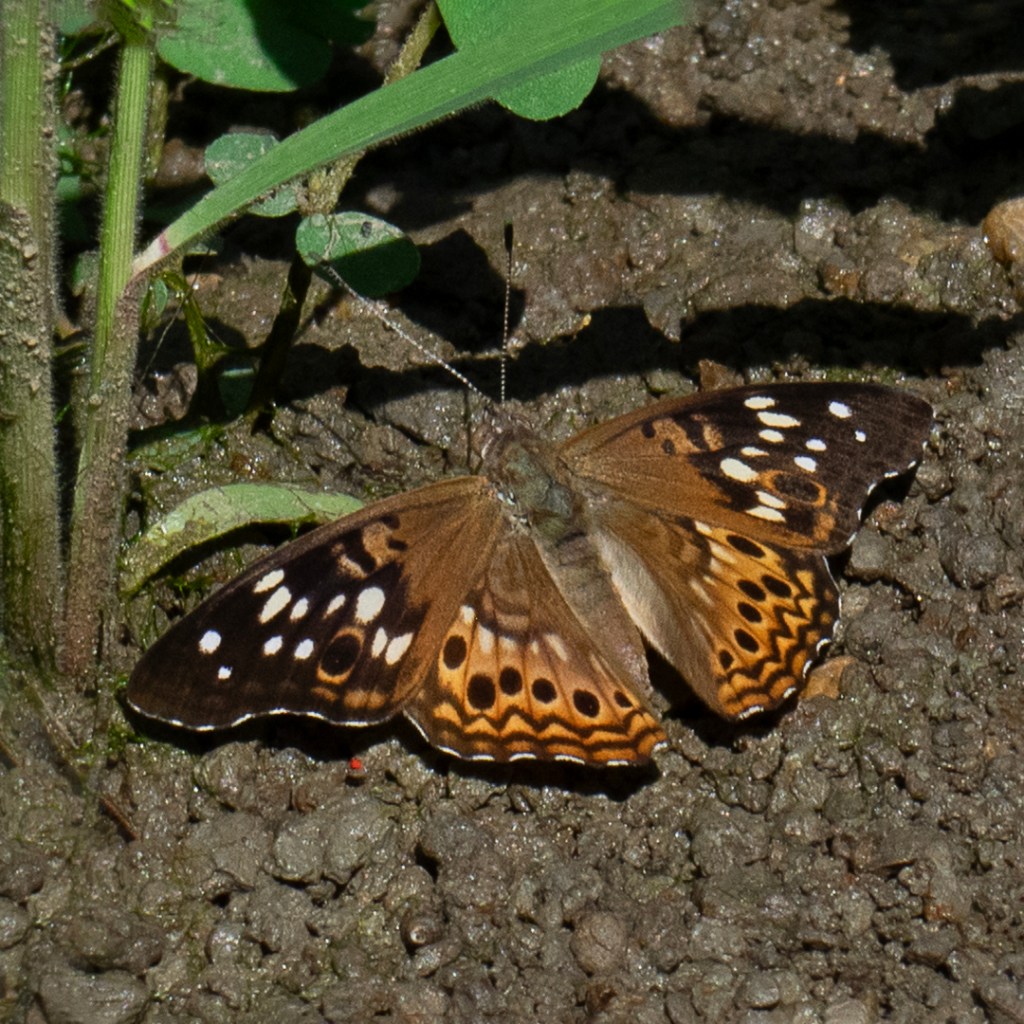
So I wrap up this post with one more treat–a lovely, thirsty butterfly that was drawing water and minerals on the muddy bank of the Tensas River. Plus a couple of reminders. I don’t often use this blog as a soapbox, but… here goes:
First, I’ve said it before and I’ll say it again: Tensas never disappoints. But it is, like all of our treasure of national refuges, understaffed. I saw signs of that Sunday: storm debris where it should not be, downed trees still impinging on the road, invasive species flourishing, signage that needs replacing. Remember this when you speak to politicians and plan your vote. We must not let our refuges go!!!
Second, we are in what many people of faith around the world celebrate as the Season of Creation, from Sept. 1 through Oct. 4, the feast day of St. Francis of Assisi. But even if you are not a person of faith, my message is the same: Get out there and see. Immerse yourself in creation. Lean a thing or two about what you are looking at! The experience will be good for your mind, body and spirit. And when we all learn more and appreciate more, we will all do a better job of doing what we must to nurture this amazing, awe-inspiring, wonderous world. GO!
 Edge & Essence